

Most homeowners do not discover hidden water damage during a dramatic flood or burst pipe emergency. More often, it begins quietly as a faint musty smell near the hallway bathroom, paint bubbling slightly near a window, flooring that feels uneven underfoot, or drywall that suddenly seems softer than it should. In many San Diego homes, these small warning signs develop gradually enough that people dismiss them for months before realizing something larger is happening behind the walls.
That is also why many homeowners become confused when termites enter the picture. While termites are not literally created by water damage, subterranean termites are strongly attracted to damp, weakened wood and moist structural environments.
In many cases, what homeowners think is simply a termite issue is actually a larger moisture problem that has been developing inside the property for a long time.
At Mighty Dry, restoration professionals regularly inspect homes throughout San Diego County where slow leaks, hidden moisture, and structural dampness quietly created the conditions for wood deterioration, mold growth, and termite activity simultaneously. Understanding how these problems overlap is one of the most important steps in protecting a property before damage becomes significantly more expensive to repair.
Why Hidden Moisture Is So Common in San Diego Homes
Many people assume Southern California’s dry climate prevents serious moisture issues, but San Diego properties face a unique combination of environmental and structural conditions that often allow hidden water damage to go unnoticed.
Coastal humidity, marine layer moisture, aging plumbing infrastructure, slab foundations, older roofing systems, and gradual pipe leaks all contribute to structural moisture accumulation inside walls, ceilings, crawlspaces, and flooring systems. In neighborhoods like La Jolla, Point Loma, Oceanside, and Del Mar, homes are constantly exposed to salt air and fluctuating humidity levels that affect building materials over time.
Unlike a major flood event, slow leaks are much harder to detect. A small drip behind drywall may continue for months before visible symptoms appear. By that point, moisture may already be affecting insulation, framing, subflooring, and adjacent structural materials.
This becomes especially concerning because subterranean termites actively seek out damp environments. Moisture-softened wood is easier for them to penetrate, nest around, and damage over time.
That is why the relationship between termite activity and water damage is so important for homeowners to understand. Treating only the visible issue often leaves the deeper structural problem unresolved.
Termite Damage and Water Damage Often Look Similar
One reason searches for “termite vs water damage” are so common is because the symptoms overlap in ways that can be difficult for homeowners to distinguish on their own.
Water damage often causes drywall to swell, soften, discolor, or bubble. Paint may begin peeling unevenly, flooring may warp, and rooms may develop a persistent damp smell. In some homes, the drywall near baseboards becomes noticeably soft or brittle when touched.
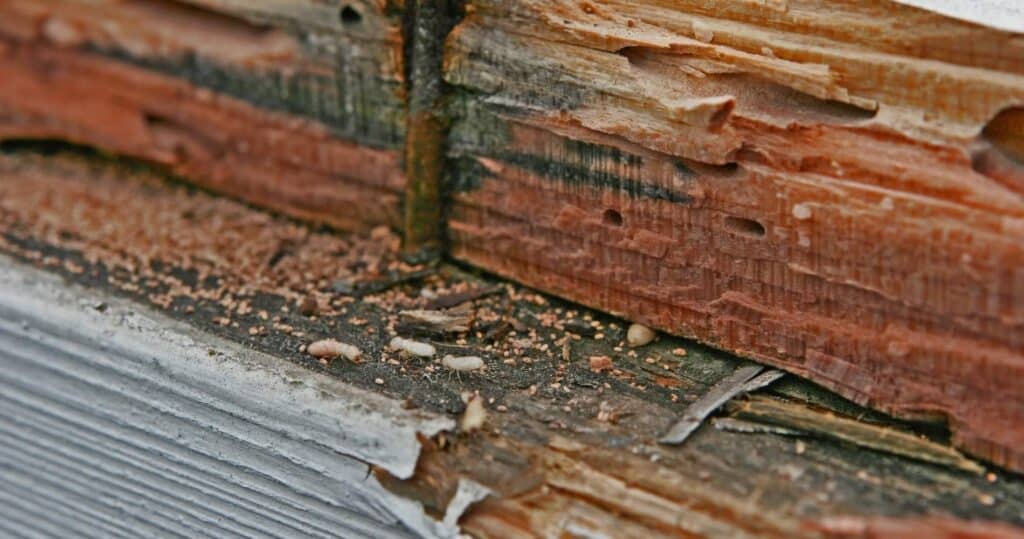
Termite damage, meanwhile, frequently affects wood internally before visible damage appears on the surface. Wood may sound hollow, crumble under pressure, or show subtle tunneling patterns beneath paint and drywall layers.
The complication is that many San Diego homes are dealing with both conditions simultaneously.
A hidden plumbing leak may weaken structural wood over time. That moisture then attracts termites, which accelerate the deterioration further. By the time homeowners notice visible damage, there may already be significant structural compromise behind the walls.
This is one reason experienced restoration professionals approach inspections differently than someone simply patching drywall or repainting damaged surfaces.
Why Soft Drywall Should Never Be Ignored
Soft drywall is one of the clearest warning signs that moisture has likely been trapped inside a wall cavity for an extended period of time.
Many homeowners initially assume soft drywall is only cosmetic, especially if the area appears relatively small. But drywall rarely softens without an underlying source of moisture feeding the problem from behind.
In San Diego homes, common causes include:
- slow pipe leaks
- roof seepage
- condensation buildup
- appliance leaks
- improperly sealed windows
- slab moisture intrusion
The visible drywall damage is often only a fraction of what is happening internally. Moisture can spread horizontally through insulation, wick into framing, and create conditions favorable for mold growth and termite activity long before the surface fully deteriorates.
One of the biggest mistakes property owners make is repairing the drywall cosmetically before determining whether the structure itself is fully dry.
Without proper moisture testing and structural drying, trapped moisture can remain active behind newly repaired surfaces, allowing deterioration to continue unnoticed.
Why Structural Drying Matters Before Repairs Begin
Homeowners understandably want visible damage repaired quickly, especially in kitchens, bathrooms, or living spaces where damage affects daily life. But experienced San Diego restoration companies know that drying the structure properly is often the most important stage of the entire process.
Structural drying involves far more than removing visible water. Restoration professionals use moisture meters, thermal imaging equipment, industrial dehumidifiers, and commercial air movers to stabilize moisture levels inside walls, subfloors, framing systems, and insulation materials.
In coastal Southern California, natural evaporation alone is often insufficient because ambient humidity slows the drying process considerably.
If moisture remains trapped inside the structure:
- wood rot may continue spreading
- termite activity may persist
- mold growth can accelerate
- odors may linger
- drywall deterioration often returns
This is why reputable restoration companies prioritize identifying the moisture source and fully drying the affected structure before reconstruction or cosmetic repairs begin.
Why San Diego Homeowners Often Misdiagnose the Problem
Many homeowners searching for “water termites” are trying to make sense of multiple symptoms appearing at the same time.
A wall may feel damp while nearby trim shows termite damage. Flooring may warp while insects appear near baseboards. Because the problems overlap visually, it becomes easy to assume one issue caused everything.
In reality, moisture is frequently the underlying catalyst.
This is especially common in older San Diego homes with aging plumbing systems or previous undocumented leaks. Homes throughout North Park, Clairemont, Chula Vista, and East County often contain hidden moisture damage from older pipe materials, roof vulnerabilities, or improperly ventilated areas that slowly worsen over time.
The longer moisture remains untreated, the more likely secondary problems become.
That is why early professional inspection matters so much. Detecting moisture before major structural deterioration develops can dramatically reduce long-term repair costs and help prevent recurring problems later.
Protecting Your San Diego Property Long-Term
One of the most important things homeowners can understand is that water damage is rarely isolated to what is visible on the surface.
By the time drywall softens, paint bubbles, or termite activity becomes noticeable, moisture may already have affected surrounding structural materials for quite some time. Addressing the underlying moisture source early is often what prevents much larger structural repairs later.
At Mighty Dry, restoration teams help homeowners throughout San Diego, La Jolla, Oceanside, Sorrento Valley, Chula Vista, and surrounding communities identify hidden moisture issues, fully dry affected structures, and reduce the long-term risks associated with water intrusion and structural decay.
If you notice soft drywall, unexplained musty odors, bubbling paint, warped flooring, or signs of termite activity, scheduling a professional moisture inspection early can help prevent far more extensive damage down the line.
Frequently Asked Questions
Can water damage attract termites?
Yes. Subterranean termites are strongly attracted to damp wood and moisture-rich environments. Water-damaged framing often becomes significantly more vulnerable to infestation.
Is soft drywall always caused by water damage?
In most cases, yes. Soft drywall usually indicates prolonged moisture exposure behind the wall, even if the original leak source is no longer obvious.
Should termite treatment happen before structural drying?
Not usually. If hidden moisture remains active, structural deterioration may continue even after termites are treated. Proper drying and moisture stabilization are critical first steps.
Can hidden water damage exist without obvious leaks?
Absolutely. Many San Diego homes develop slow leaks inside walls, beneath flooring systems, or around roofing penetrations that remain unnoticed for months.